
Solutions
Connectivity solutions shaped by the environment they serve
An operator's network, an office tower, and a rural valley each need a different engineering answer. These are the environments we plan for most often, and how we approach each one.
ISP and Telecommunications Operators
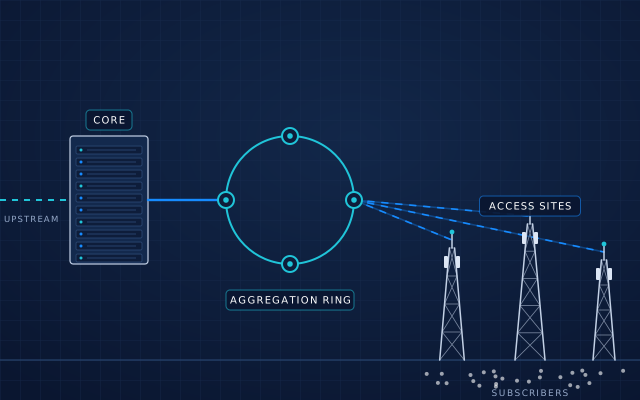
Internet service providers and telecom operators need networks that scale commercially as well as technically. We support core, aggregation, and access layer design, backhaul and transport planning, and technology roadmaps that align network investment with subscriber growth.
Typical considerations
- Core and aggregation architecture
- Backhaul capacity and redundancy
- Access technology by service area
- Network management and monitoring
Multi-Floor Buildings and Business Centers
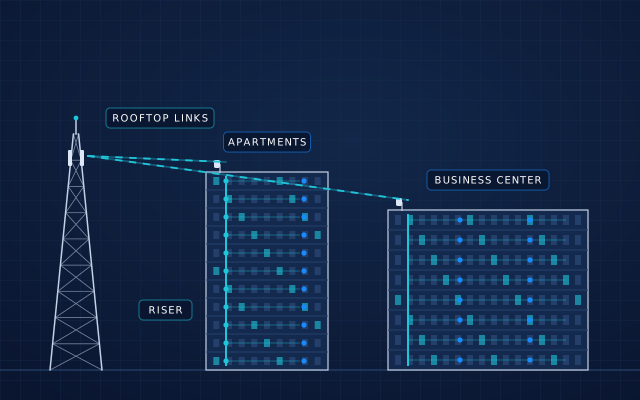
Apartment buildings, office towers, and business centers need fast, dependable connectivity delivered across many floors and tenants. We plan building-based ISP connectivity, from rooftop wireless links to vertical distribution and in-building access.
Typical considerations
- Rooftop links and line of sight
- Riser and vertical distribution paths
- In-building access and tenant separation
- Equipment placement, power, and access
Rural and Underserved Communities
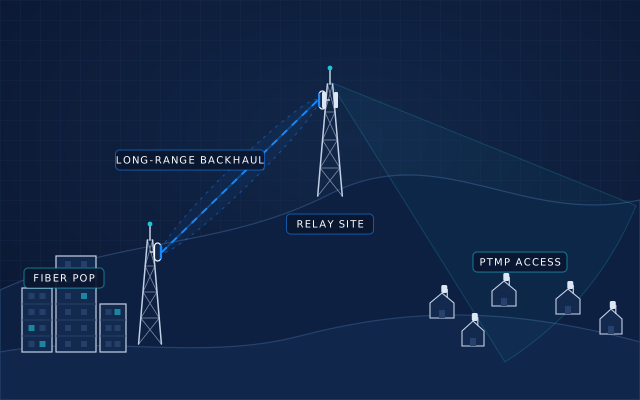
Extending broadband to rural and underserved areas calls for careful use of terrain, relay sites, and cost-effective wireless technologies. We help community projects, operators, and developers plan networks that can reach dispersed users sustainably.
Typical considerations
- Terrain and line-of-sight analysis
- Relay and tower site strategy
- Long-distance microwave backhaul
- Cost per connected location
Network Modernization Projects
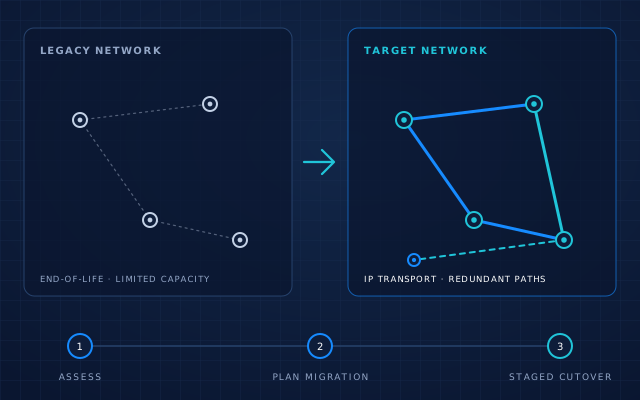
Many networks still rely on legacy links, end-of-life equipment, or architectures that no longer match demand. We assess what you have, define the target network, and plan a staged migration that limits risk and service disruption.
Typical considerations
- Inventory and condition of existing assets
- Target architecture and capacity
- Migration sequencing and cutover planning
- Reuse versus replacement decisions
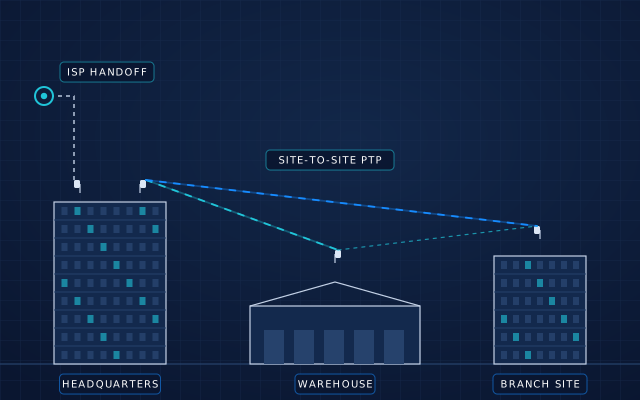
Enterprise and Commercial Connectivity
Businesses, campuses, and industrial sites often need private wireless links, site-to-site connectivity, or resilient alternatives to wired services. We design enterprise connectivity that fits operational needs, security expectations, and budget.
Typical considerations
- Site-to-site and campus wireless links
- Redundant and backup connectivity
- Private LTE / 5G evaluation
- Integration with existing IT networks
Does your project look different?
These are common starting points, not limits. If your connectivity challenge does not fit neatly into one category, we would like to hear about it.